Pneumatic Cylinder Force Calculator: Push, Pull, Bore Size
An air cylinder's force is simply the air pressure times the area of the piston it pushes on. That makes the math easy, but two things catch people out. First, a cylinder pulls with less force than it pushes, because the piston rod covers part of the piston on the return side. Second, the theoretical figure is what the cylinder makes when it is standing still against the load; once it has to move, friction and the need for speed eat into it, so it is normal to size the cylinder so the load is only part of its theoretical force. This calculator works out push and pull force from a bore size, or works backward from a load to the bore you need.
Cylinder force or bore size
How the calculation works
On the push stroke, air acts on the whole face of the piston, so the area is π × bore² ÷ 4. On the pull stroke, the rod takes up the middle of the piston and air only acts on the ring around it: π × (bore² − rod²) ÷ 4. Force is that area times the gauge pressure. In inch units, square inches times PSI gives pounds-force directly. In metric, 1 bar is 0.1 newtons per square millimeter, so square millimeters times bar times 0.1 gives newtons.
Worked example: a 2 inch bore cylinder with a 5/8 inch rod at 80 PSI. The piston area is 3.14 square inches, so it pushes with about 251 lbf. The ring area on the rod side is 2.83 square inches, so it pulls with about 227 lbf. If the job involves moving the load rather than just holding it, and you size at 70%, the cylinder is good for a load of about 176 lbf pushing.
The bore size mode runs the same formula backward: area needed = load ÷ (pressure × load share), and bore = √(4 × area ÷ π). For a pull, the rod area is added back on before taking the square root. The calculator then rounds up to the next common bore size, since cylinders are only made in set diameters.
Choosing the load share
The 100% setting gives the textbook force, which is what you get when the cylinder is stalled against a part, such as a clamp or a press holding still. A cylinder that has to move a load needs spare force to overcome seal friction, to accelerate the load and to push air out of the exhaust side, so manufacturers' sizing guides usually tell you to keep the load to a fraction of the theoretical force. The 70% and 50% options are common rules of thumb, not fixed limits; check the cylinder maker's catalog for their own figure, especially for vertical lifts, fast cycles or side-loaded rods.
Use the pressure at the cylinder, not at the tank
The pressure that matters is what reaches the cylinder port while it is working, which is set by the regulator and reduced further by hose, fittings and valve losses. A compressor that cuts in at 90 PSI and a regulator set to 80 PSI means you should design around 80 PSI or a bit less. If force comes up short, check for pressure drop with our hose pressure drop calculator, and once the bore is chosen, work out how much air it will use with the cylinder air consumption calculator.
More from Air Compressor Mag
Best Portable Air Compressors: Picks by Job (2026)
Real portable air compressor picks by job, from tire inflation to framing, with the CFM at 90 PSI, tank size, and noise specs that actually decide it.
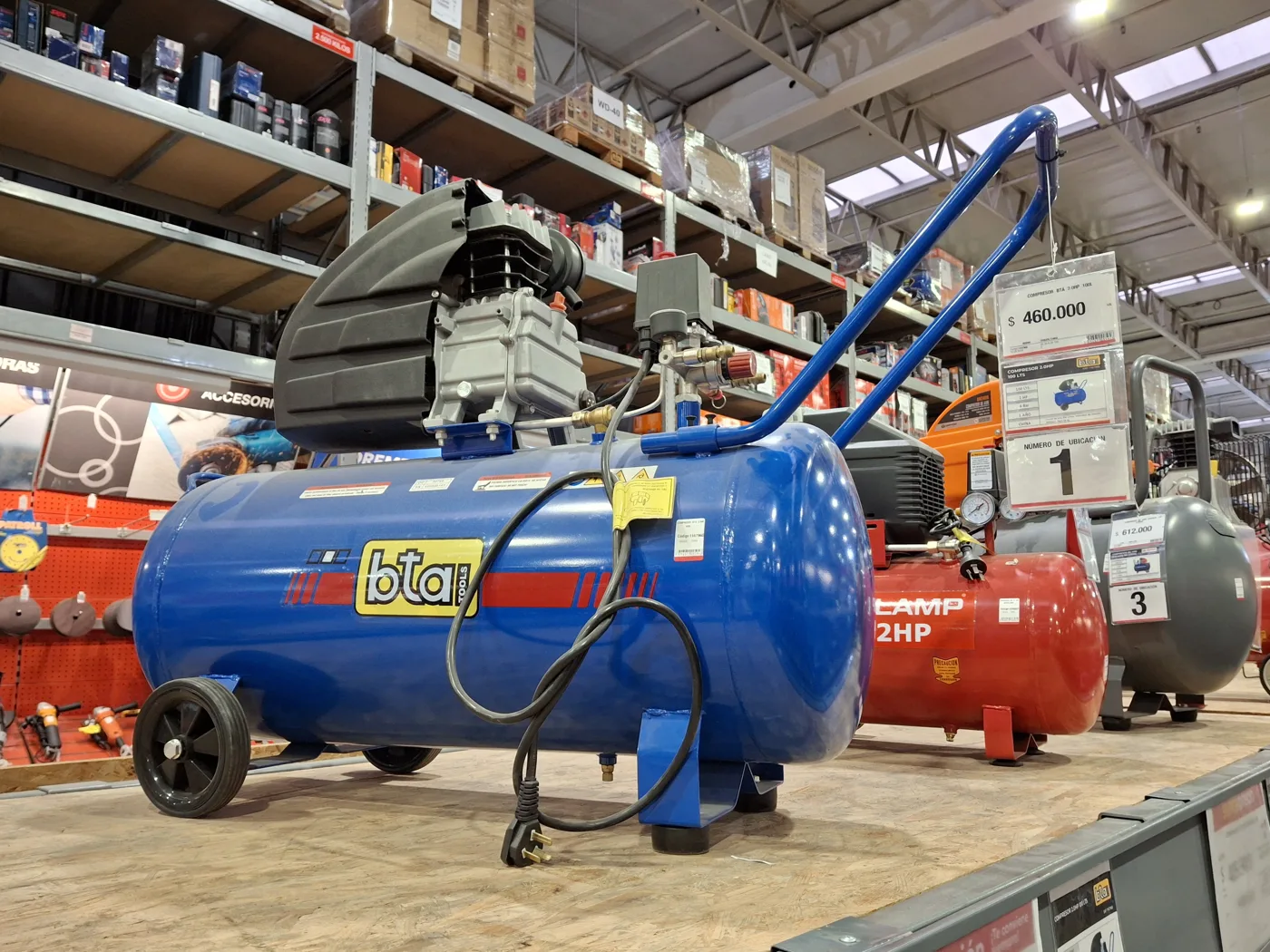
CFM Explained: How to Choose a High CFM Air Compressor for Your Tools
How to read CFM ratings and pick a high CFM air compressor: the 90 PSI standard, SCFM, a tool chart, and when you need 10, 20 or 50 CFM.
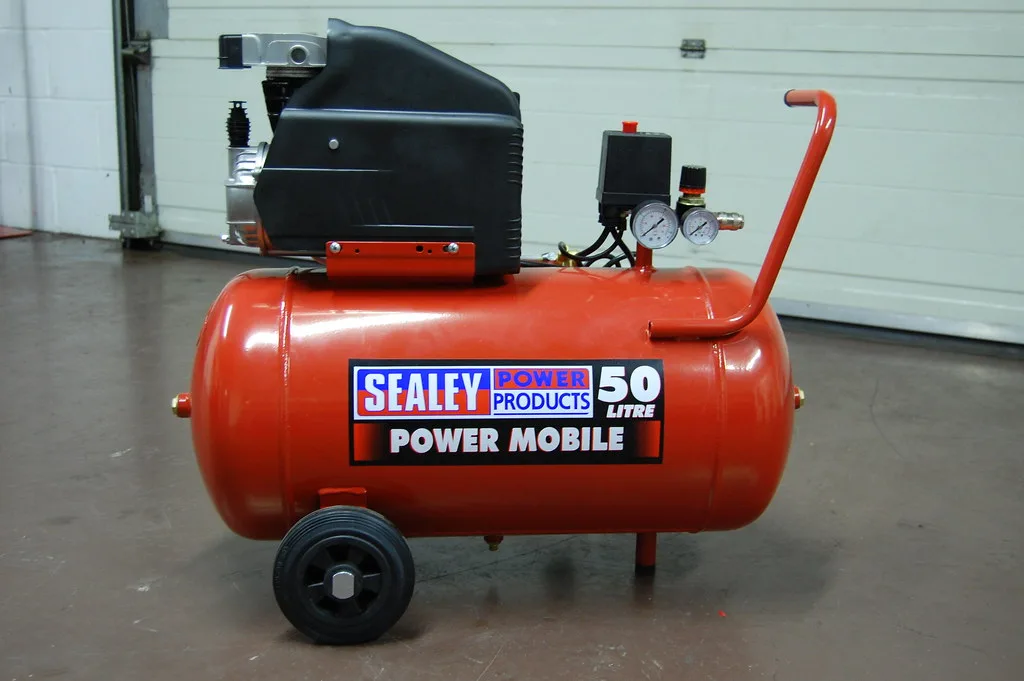
Best 30 Gallon Air Compressors for Workshops
The best 30 gallon air compressor picks for a home workshop, compared on CFM, max PSI, single-stage pumps and 120V wiring so you match the unit to your tools.