Air Compressor Repair: Fix It by Symptom
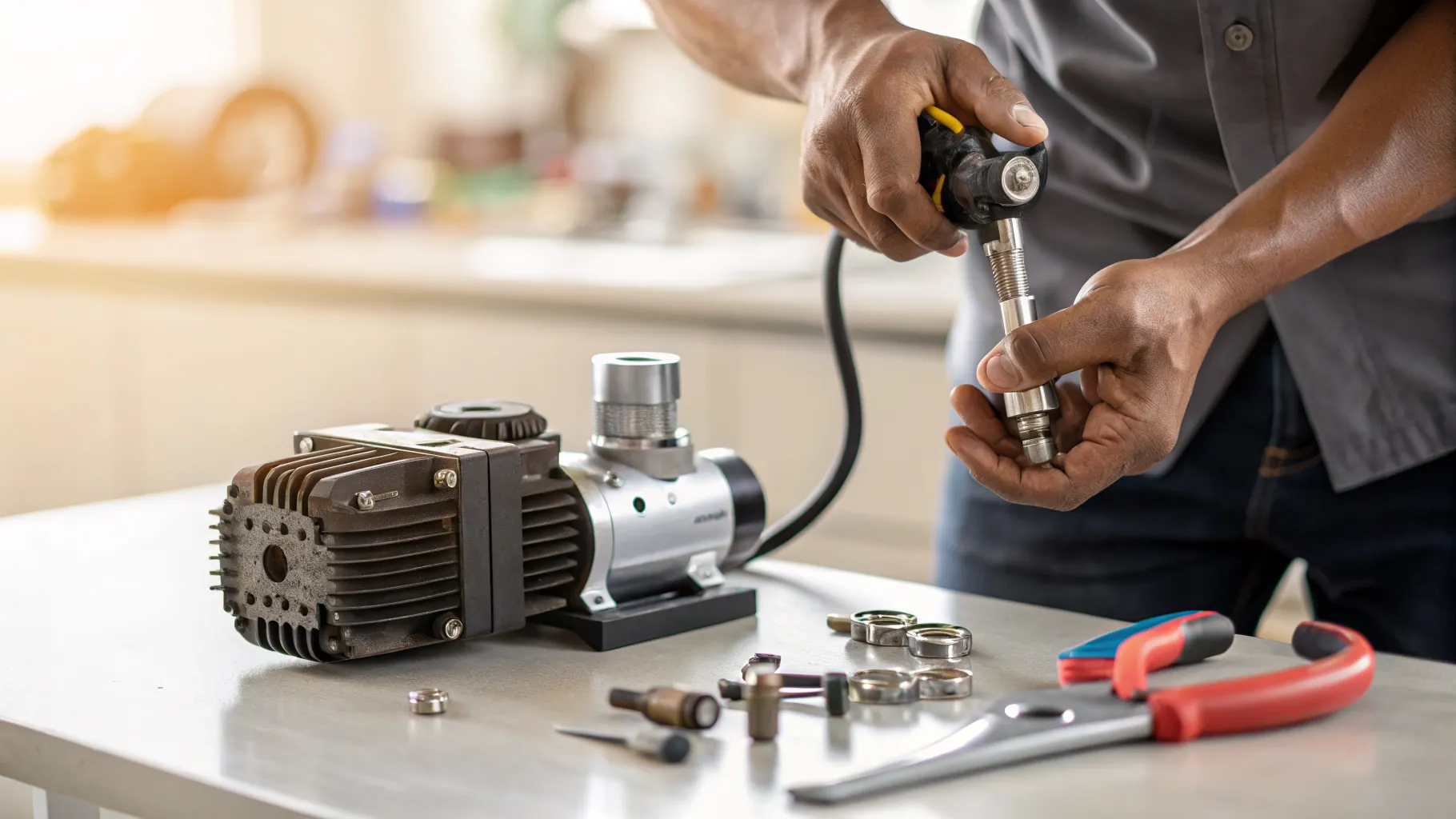
Most air compressor faults trace back to a few cheap parts: a pressure switch, a check valve, an unloader valve, a start capacitor, a worn gasket, or a leaking fitting. None cost much, and most swap out with hand tools. Work the symptom, not the whole machine.
Before you touch anything, every time: unplug it at the wall, and bleed the tank to 0 PSI through the drain valve. Confirm the gauge reads zero before you remove a single fitting. Compressed air, live wiring, and a charged capacitor can all hurt you.
What you own decides the whole repair. Oil-free portables (pancakes like the Porter-Cable C2002 and DeWalt DWFP55126, and small steel-tank units like the California Air Tools 8010) have a sealed pump you don’t rebuild; repairs are the bolt-on parts, and if the pump itself is shot, the machine is done. Oil-lubricated stationary units (Quincy QT-54 and similar 60-gallon cast-iron pumps) are built to be rebuilt: rings, valve plates, gaskets, and seals are all serviceable, and the pump is rated for tens of thousands of hours. The “oil in the air” and 230V breaker sections below apply to those.
The three parts that cause most no-start and pressure problems
Almost every confusing fault on a portable comes back to one of these three. Know what each does and you’ll out-diagnose most shops.
| Part | Job | When it fails |
|---|---|---|
| Pressure switch | Starts the motor at cut-in, stops it at cut-out (a typical portable runs a ~30 PSI band, for example 120 cut-in to 150 cut-out) | Motor never shuts off, or never starts |
| Check valve | One-way valve into the tank: lets air in, blocks it flowing back into the pump | Air bleeds back out when the unit stops; motor restarts against pressure and strains or trips |
| Unloader valve | Vents the air trapped above the piston at shutdown so the motor restarts against zero head pressure | No hiss at cut-out; motor hums, stalls, or trips on the next start |
Two tells worth memorizing. A healthy compressor gives a short hiss at cut-out as the unloader dumps head pressure; no hiss means a stuck unloader. And a steady bleed at the pressure switch after it stops is almost always the check valve, not the switch.
One test separates electrical faults from valve faults: drain the tank fully and start the unit empty. Starts fine empty but hums, stalls, or trips once there’s pressure? That’s the check valve or unloader, not the motor. You’ll use this test in several sections below.
Won’t build or hold pressure
The pump runs but the gauge barely climbs, or it climbs then sags. Likely causes, in order: drain valve left open, an air leak, a clogged intake filter, a cracked reed valve, or a blown valve-plate gasket.
- Close the drain valve. The most common cause and the most embarrassing. Check it first, every time.
- Find the leak. Pressurize, shut off, and brush a 1-to-10 mix of dish soap and water over the fittings, coupler, hose, drain valve, and tank seams. Bubbles mark the spot. Tighten threaded joints or rewrap with two to three turns of PTFE tape.
- Clean or replace the intake filter. A clogged filter starves the pump so it fills slowly. This alone often restores normal fill times.
- Check the reed valves and valve-plate gasket. A cracked reed or failed gasket lets compressed air leak back into the pump on every stroke, so the motor runs but pressure never builds. On a serviceable pump, a valve-plate and gasket kit is the cheap fix. Cleaning a sticky reed sometimes works, but often the part needs replacing.
- Hand-test the piston seal (oil-lubed units). Unplugged, head off, palm over the cylinder, rotate the pump by hand. You should feel suction and pressure; almost nothing means worn rings or seal.
On a sealed oil-free pancake, steps 1 to 4 cover nearly everything. The pump isn’t worth rebuilding, so if the valve plate doesn’t fix it, you’re shopping for a new unit.
Won’t start or hums and trips
The motor buzzes but won’t spin, or it tries and trips the thermal overload. Likely causes: failed start capacitor, stuck unloader or check valve, tripped thermal overload, or low voltage from a long, thin cord.
- Check the start capacitor first. It’s the single most common “hums but won’t spin” cause. Unplugged, look for a bulging top, leaking fluid, or a burn mark; any of those means replace it. - Safety most guides skip: a capacitor holds a charge after you unplug the machine and can shock you. Discharge it first by bridging the two terminals with a resistor (around 20k ohm, 2 watts or more) for 30 to 60 seconds. Shorting it with a bare screwdriver throws a big spark and can weld the tip; don’t do that. Not sure? Hand this one to a pro.
- Reset the thermal overload. If the motor overheated and cut out, let it cool 15 to 30 minutes, then press reset. If it trips again at once, keep diagnosing.
- Run the empty-tank test. Drain fully and try to start. Starts clean empty but hums or stalls under pressure? The check valve or unloader is forcing the motor to start against trapped pressure.
- Rule out the extension cord. Best practice is a dedicated outlet and the shortest, heaviest cord you can use; see the cord gauge guide below.
Runs but never shuts off
The motor keeps running. Two clean patterns, and which one you see points straight at the fix.
Pattern A: the gauge plateaus below cut-out. The needle stalls short of shut-off and the motor runs on. That’s a leak or a worn pump that can’t make enough air to hit cut-out. Run the soap-water leak test above and check the valve plate. The switch is fine.
Pattern B: the gauge hits maximum and the motor still won’t stop. Pressure tops out, the safety relief valve may pop and vent, but the motor runs on. That’s a failed pressure switch not opening its contacts. Stop running it immediately if the relief valve is venting: that valve is your last line of defense, not a normal state. Replace the switch before running it again.
Before condemning the switch, try resetting it: with the tank empty, flip the lever from OFF to AUTO to clear a possible lockout.
Trips the breaker
The compressor pops the breaker, sometimes the moment it tries to start. Likely causes: a faulty capacitor, a stuck unloader or check valve, or an undersized or shared circuit.
- Check the capacitor. A failing one makes the motor draw excess current and trip almost instantly. Discharge and inspect it as above.
- Run the empty-tank test again. Drain and start empty. Runs fine empty but trips under pressure? The unloader isn’t venting or the check valve is stuck, so the motor takes an amp spike on restart. Replace the offending valve.
- Check the circuit. A compressor sharing a circuit, or on a breaker too small for its inrush, trips even when healthy. A big unit like a Quincy QT-54 draws around 24 amps on 230V and needs a dedicated 40A breaker; on an undersized circuit you’ll blame the compressor for a wiring fault. Confirm the motor’s draw against the breaker before buying parts.
Leaks air or loses pressure overnight
You pump it up, shut off, come back later, and the tank is soft. Likely causes: a leaking fitting or coupler, a leaking drain valve, a tired check valve, or (rare and serious) a tank-seam leak.
- Soap-test everything. Pressurize, shut off, and spray the 1-to-10 dish-soap mix over every fitting, the coupler, the hose, the drain valve, and the tank seams. Watch for growing bubbles.
- Fix by location. Threaded leaks get two to three wraps of PTFE tape. A coupler leaking at the body has a worn internal O-ring or ball; replace the coupler. A drain valve leak gets tightened first, then replaced if it still weeps.
- Watch for a fast drop at shutoff. If pressure falls quickly right after the unit stops and you hear a steady bleed at the pressure switch, that’s the check valve not holding, not the switch. Replace the check valve.
- Tank seam weeping? Stop. A leak from the tank body or seam means it’s corroding. Do not patch, weld, or keep pressurizing it. See repair-or-replace below.
Water or oil in the air line
Water is normal physics, not a fault. Compressing air wrings the moisture out of it, and roughly a tenth of that water settles in the tank, where it rusts the steel from the inside. The fix is a habit, not a part: drain the tank after every use, or at least once a day. Blow the water out and leave the drain open a minute to dry. An inline moisture trap or desiccant dryer helps at the tool, but draining is the real fix. Our oil and maintenance guide has the full schedule.
Oil in the line happens only on oil-lubricated units. A faint trace of mist can be normal; a lot means something’s wrong. Fix it in this order, and don’t just bolt on more filters, which only hides the cause:
- Check the oil level. An overfilled crankcase pushes oil past the rings. Drop it to the FULL mark and carry-over usually stops.
- Clear the crankcase breather. A plugged breather builds pressure and forces oil past the rings. Clean or replace it.
- Confirm the oil. Wrong or too-thin oil carries over more. Never use automotive oil; use a compressor-rated oil.
- Then suspect the rings. If level, breather, and oil all check out and carry-over continues, the piston rings are worn. A ring kit is the rebuild, worth doing on a serviceable cast-iron pump.
Repair or replace?
The rough rule: repair if the fix costs under about half the price of a new unit. The parts that pass that test are cheap and bolt on.
| Repair it (cheap, worth it) | Replace the unit |
|---|---|
| Pressure switch | Rusted or seam-leaking tank |
| Check valve, unloader valve | Dead motor (motor repair is expensive, rarely worth it on a consumer unit) |
| Start capacitor | Worn-out sealed oil-free pump |
| Hose, coupler, drain valve | Old unit, repeated failures, parts no longer made |
| Valve plate, gaskets, reed valves (serviceable pumps) |
Two non-negotiables. A rusted tank is a replace, full stop: a corroded pressure vessel can fail catastrophically, which means an explosion, not a slow leak. Never patch, weld, or re-pressurize one. And on a sealed oil-free pump, don’t sink money into a worn-out pump; the math never works.
Shopping for a replacement? Start with our portable compressor picks and our tools and calculators to size the next one right.
Extension cord gauge guide
Undersized cords are a leading cause of burned-out compressor motors. A thin, long cord drops voltage, so the motor pulls more amps, which makes heat, which cooks the windings. Keep voltage drop within about 3 to 5 percent.
| Cord length | Minimum gauge (typical 15A portable) |
|---|---|
| Up to 50 ft | 12-gauge |
| Up to 100 ft | 10-gauge |
DeWalt’s own manual for the DWFP55126 calls for 14-gauge or larger and 50 feet or less. Go heavier and shorter than the minimum when you can, and run a dedicated outlet.
Frequently asked questions
My compressor runs but won’t build pressure. What’s wrong? Check a drain valve left open first, then air leaks (soap-test the fittings, coupler, hose, and seams), then a clogged intake filter. If those are clean, a cracked reed valve or blown valve-plate gasket is letting air leak back inside the pump.
Why does my air compressor hum but not start? The start capacitor is the most common cause; look for a bulging, leaking, or burnt one. After that, suspect a stuck unloader or check valve (drain the tank and see if it starts empty), a tripped thermal overload, or low voltage from a long, thin cord.
Why does my compressor trip the breaker? Usually a failing capacitor or a stuck unloader or check valve making the motor restart against tank pressure. Drain and start empty: if it only trips under pressure, it’s a valve. Also rule out an undersized or shared circuit.
Is the check valve or the pressure switch leaking air when it’s off? Almost always the check valve. A steady bleed at the pressure switch after the unit stops, with pressure dropping fast, means the check valve isn’t holding.
How often should I drain my air compressor tank? After every use, or at least once a day. The water that condenses inside the tank corrodes the steel, so blow it out and leave the drain open a minute to dry.
Can I use an extension cord with my air compressor? Yes, if it’s heavy and short: 12-gauge up to 50 feet, 10-gauge to 100 feet for a typical 15A portable. Too thin or too long drops voltage and can burn out the windings.
There’s oil in my air line. Is that normal? A faint trace can be on an oil-lubricated unit; it never happens on an oil-free pump. A lot means an overfilled crankcase, a plugged breather, the wrong oil, or worn rings, checked in that order.
Is it worth repairing my air compressor? Yes for cheap bolt-on parts (switch, check valve, unloader, capacitor, coupler, gaskets). No if the tank is rusted, the motor is dead, or it’s a worn-out sealed oil-free pump.
Is it safe to fix or weld a leaking tank? No. A corroded or seam-leaking tank can fail catastrophically under pressure. Don’t patch it, weld it, or keep using it. Replace the compressor.
More from Air Compressor Mag
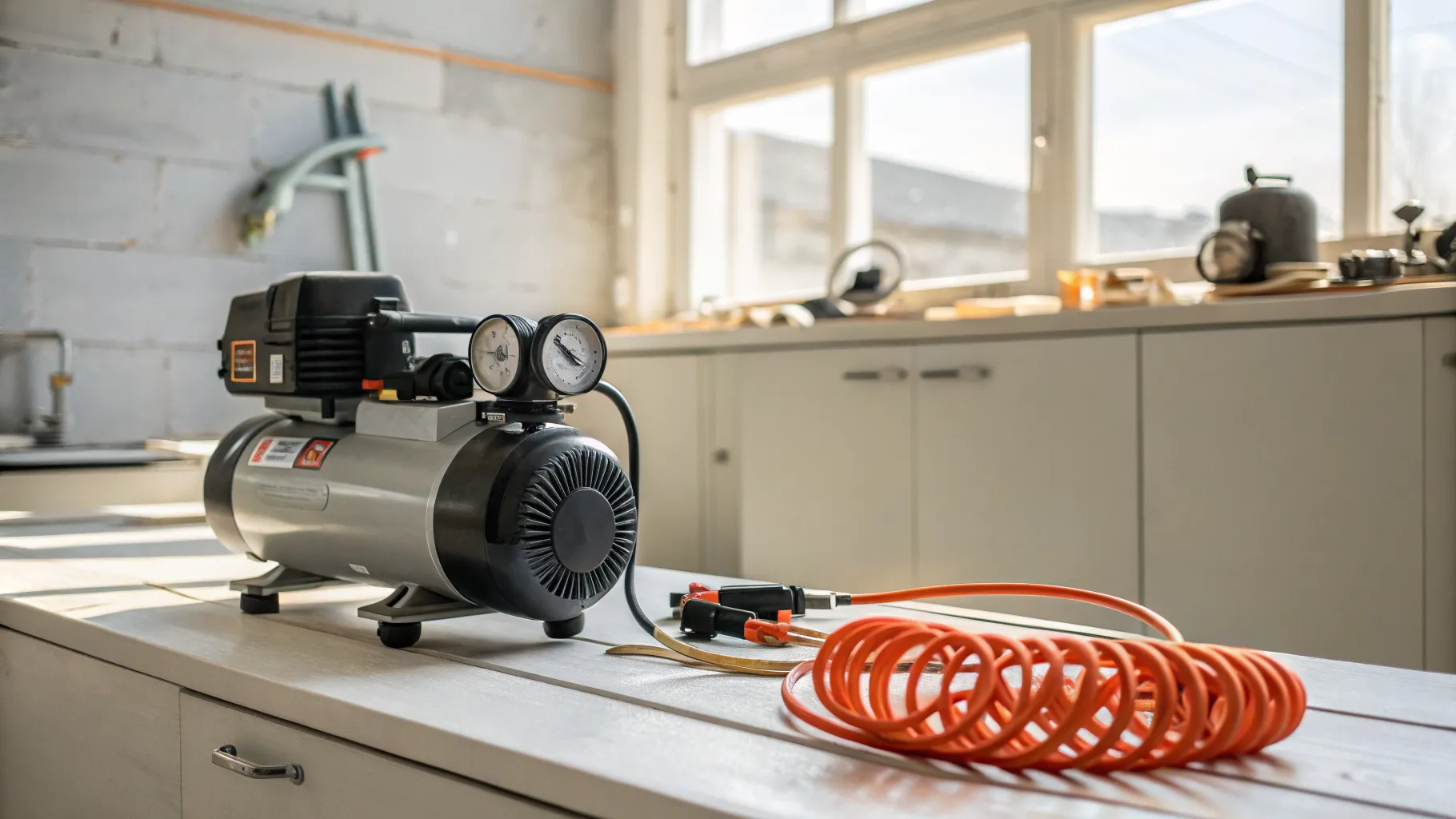
Best Portable Air Compressors: Picks by Job (2026)
Real portable air compressor picks by job, from tire inflation to framing, with the CFM at 90 PSI, tank size, and noise specs that actually decide it.
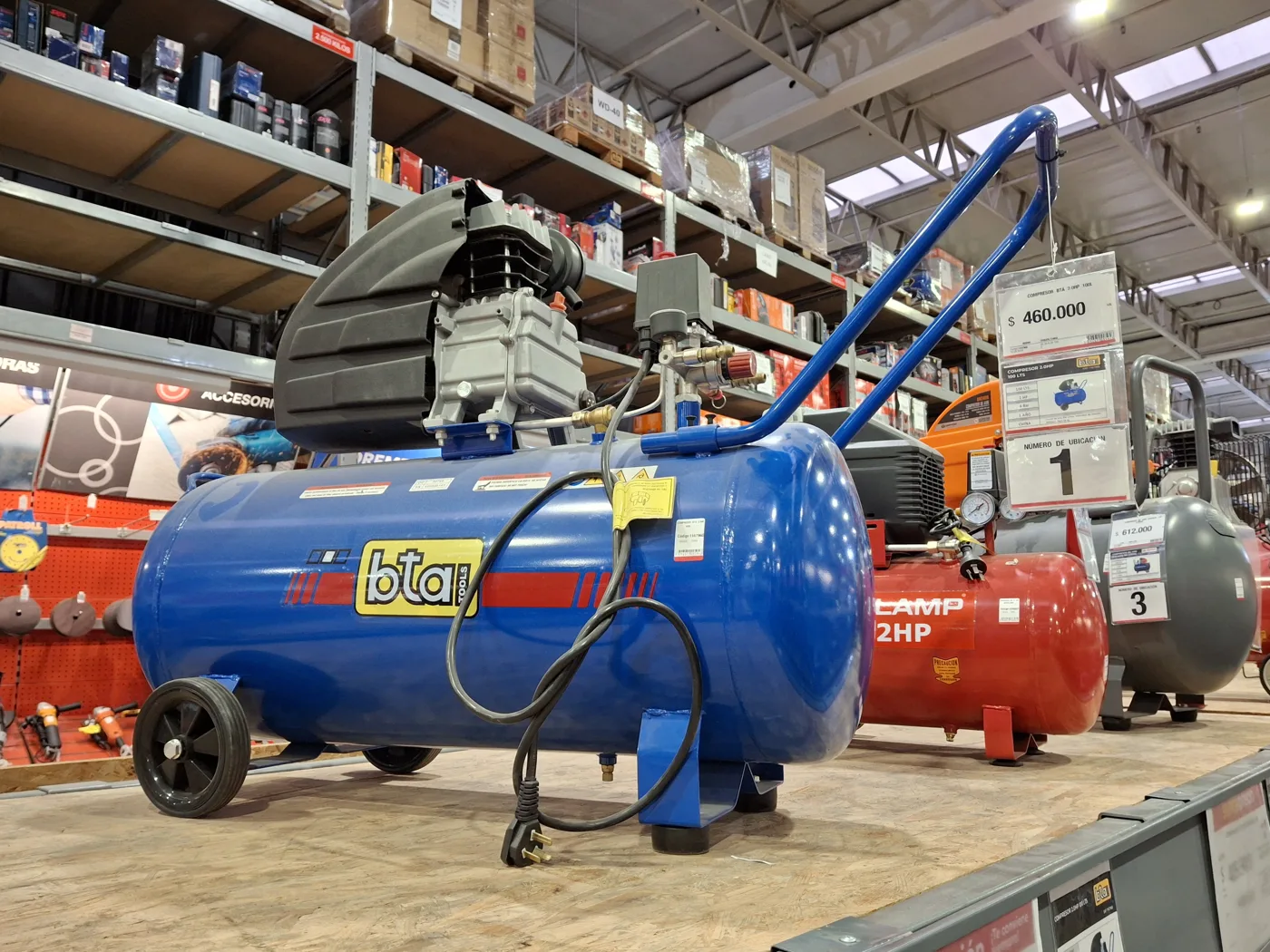
CFM Explained: How to Choose a High CFM Air Compressor for Your Tools
How to read CFM ratings and pick a high CFM air compressor: the 90 PSI standard, SCFM, a tool chart, and when you need 10, 20 or 50 CFM.
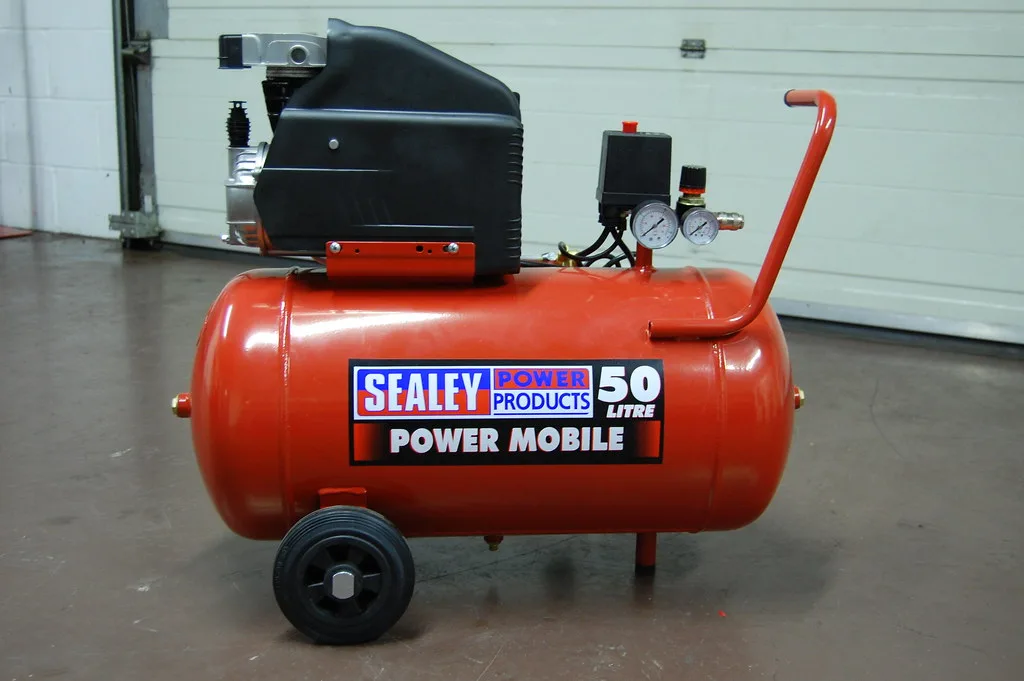
Best 30 Gallon Air Compressors for Workshops
The best 30 gallon air compressor picks for a home workshop, compared on CFM, max PSI, single-stage pumps and 120V wiring so you match the unit to your tools.